April 8, 2026
March 25, 2026
Everyone obsesses over location and photos, then a single dusty skirting board costs a star rating. In short lets, speed and polish share the same clock. Guests expect hotel-level cleanliness, yet you have just a few hours between checkout and the next arrival. That is where a trusted short let cleaning partner makes the difference between glowing reviews and quiet cancellations.
If you host in Cambridge, you know the rhythm of the city. Conference weeks, graduation season, visiting academics, and last-minute weekend breaks. A reliable short let cleaning Cambridge service keeps pace with that rhythm, turns properties around on time, and preserves the little details that guests always notice first. This guide explains what great service looks like, what to expect from a Cambridge-specific team, how pricing usually works, and how to set up a system that quietly protects your ratings.
Short-let cleaning is hospitality, not domestic upkeep. The brief is speed, consistency, and staging. The team works to a checklist tailored to your space, but they also reset the property so it photographs well and feels instantly welcoming.
There is no margin for “I will do it next time.” Hair in the shower or a sticky remote means a message to the host before the guest even sets down their bag. A short-let cleaner works to protect three things at once: hygiene, guest perception, and your schedule.
Laundry multiplies the complexity. Beds must be fully stripped and remade to a standard that photographs neatly. Towels must be counted, stained items rotated out, and backup sets held in reserve. Consumables have to be topped up in a consistent way so guests find what they expect every time.
Finally, changeovers are time-boxed. A reliable team confirms arrival windows, works efficiently without cutting corners, and sends evidence when the job is done. That reliability is what turns occasional stays into year-round income.
Cambridge hosts face a few local quirks that a generic service can miss.
Hard water leaves limescale on shower screens, taps, and kettles. A Cambridge-savvy team treats glass and chrome with the right descaler, then polishes to avoid streaks. River air and older terrace homes create dust more quickly than you think. Window sills and sash frames need regular attention. Punting weekends and cycling culture bring grit into hallways. Entry mats and a quick floor refresh near the door make a visible difference.
Scheduling also follows the University’s calendar and the tech corridor. Graduation weeks, college open days, science festivals, and conference clusters near the Biomedical Campus all compress turnaround times. A local team plans for those spikes, adds staff on peak Fridays and Sundays, and keeps spare linen in circulation to avoid bottlenecks at the laundrette.
Waste handling has its own rhythm too. Cambridge City Council’s recycling rules are specific, and contamination leads to missed collections. A trained cleaner knows which bins to use in your street or building, leaves them in the right place on collection days, and avoids overfilling. Those small operational touches keep common areas tidy and neighbours happy.
A professional changeover has a flow that balances speed with care. Here is how a tight turnaround usually works in practice.
Arrival and access are confirmed in advance. The cleaner collects the key from a lockbox or a coded entry, then does a quick walk-through to check windows, heating, and any guest messages you forwarded. If there are issues like a broken glass or a spill, they escalate it immediately so you can decide on a replacement or compensation.
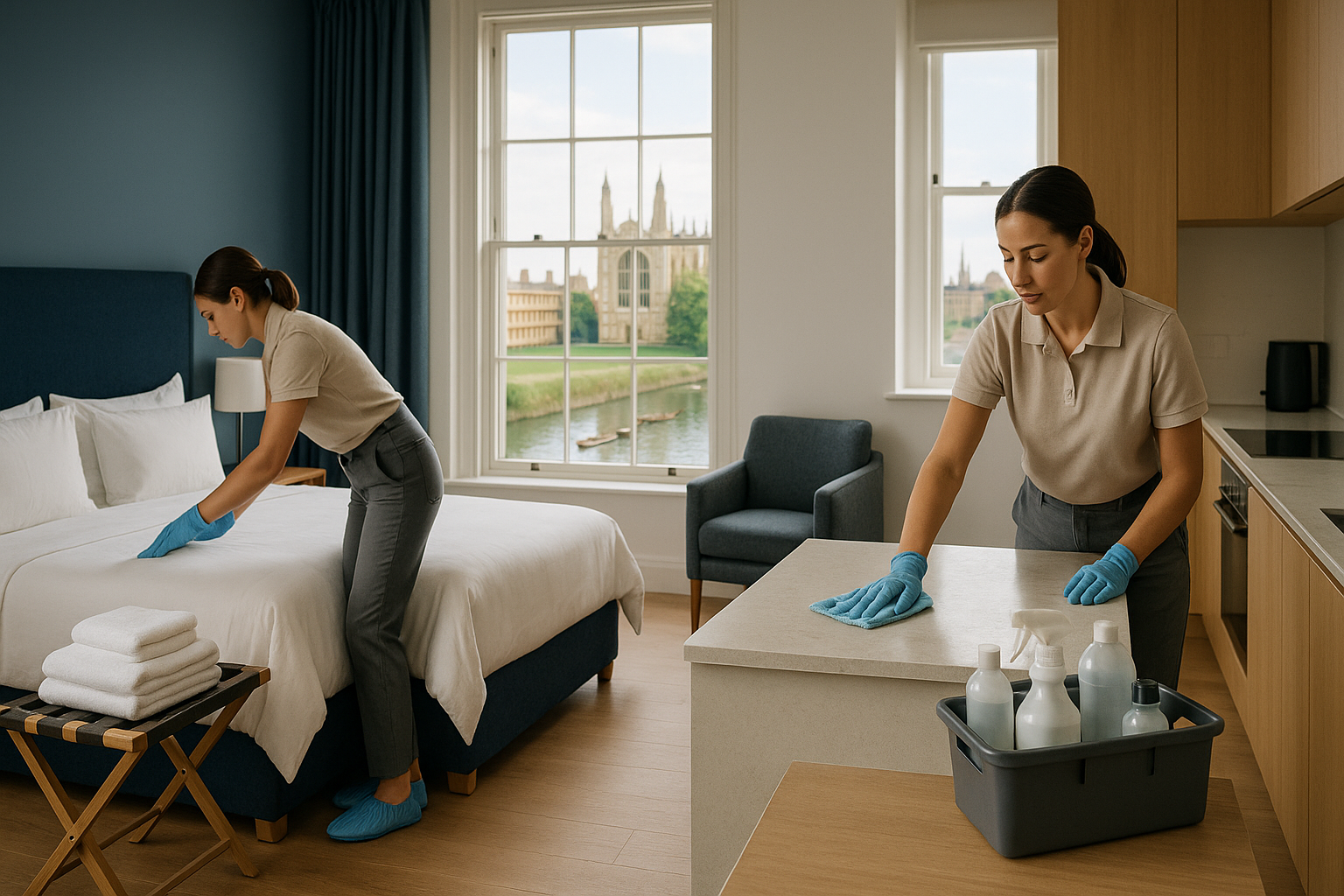
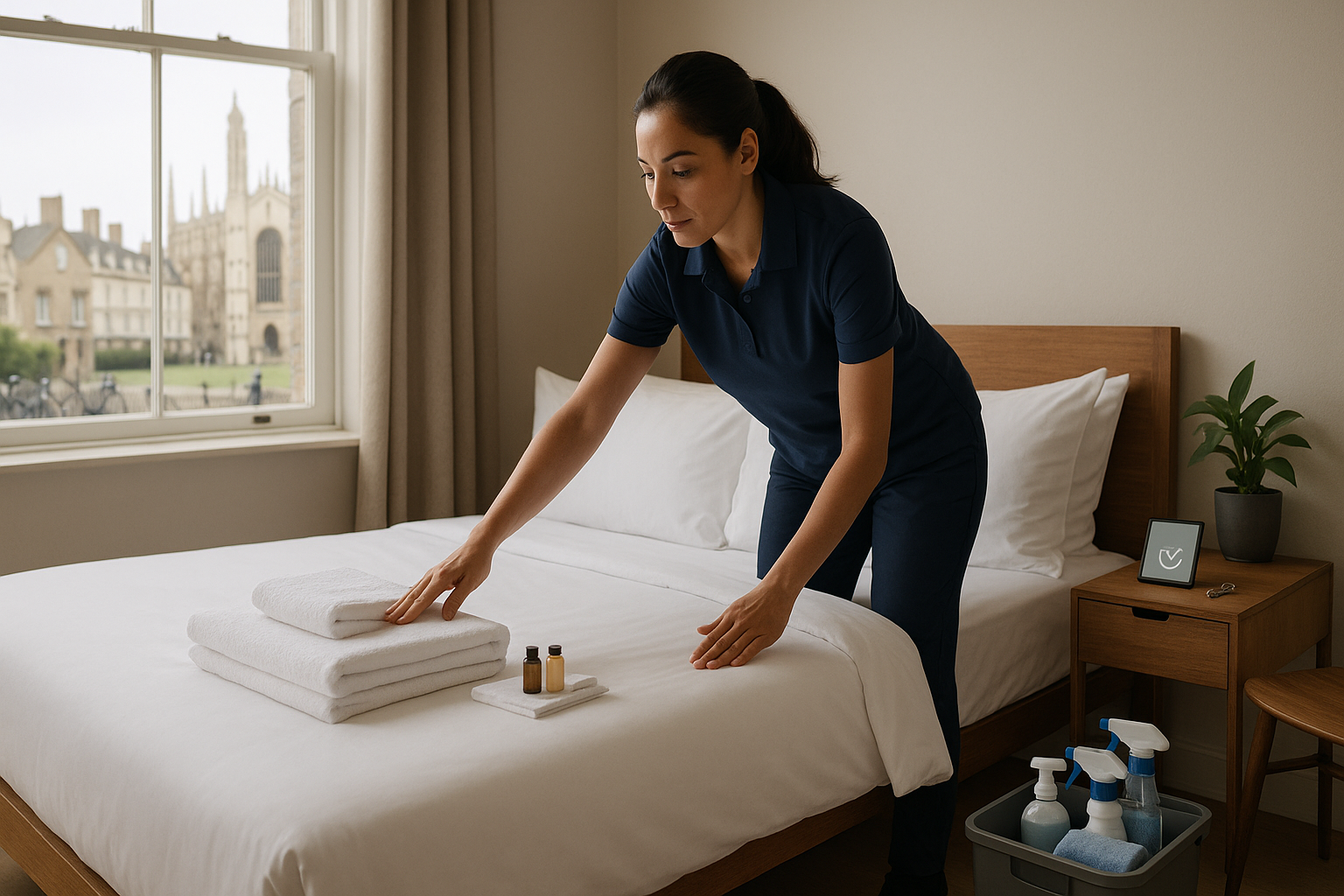
Beds are stripped first. Used linen and towels go into labelled bags. If you store clean sets on site, the bed is remade right away. If linen is delivered, the team works around the bedroom to finish once the drop arrives. Bed-making is not rushed. Sheets are pulled tight, corners are squared, pillows shaken and styled so the bed looks like the photo on your listing.
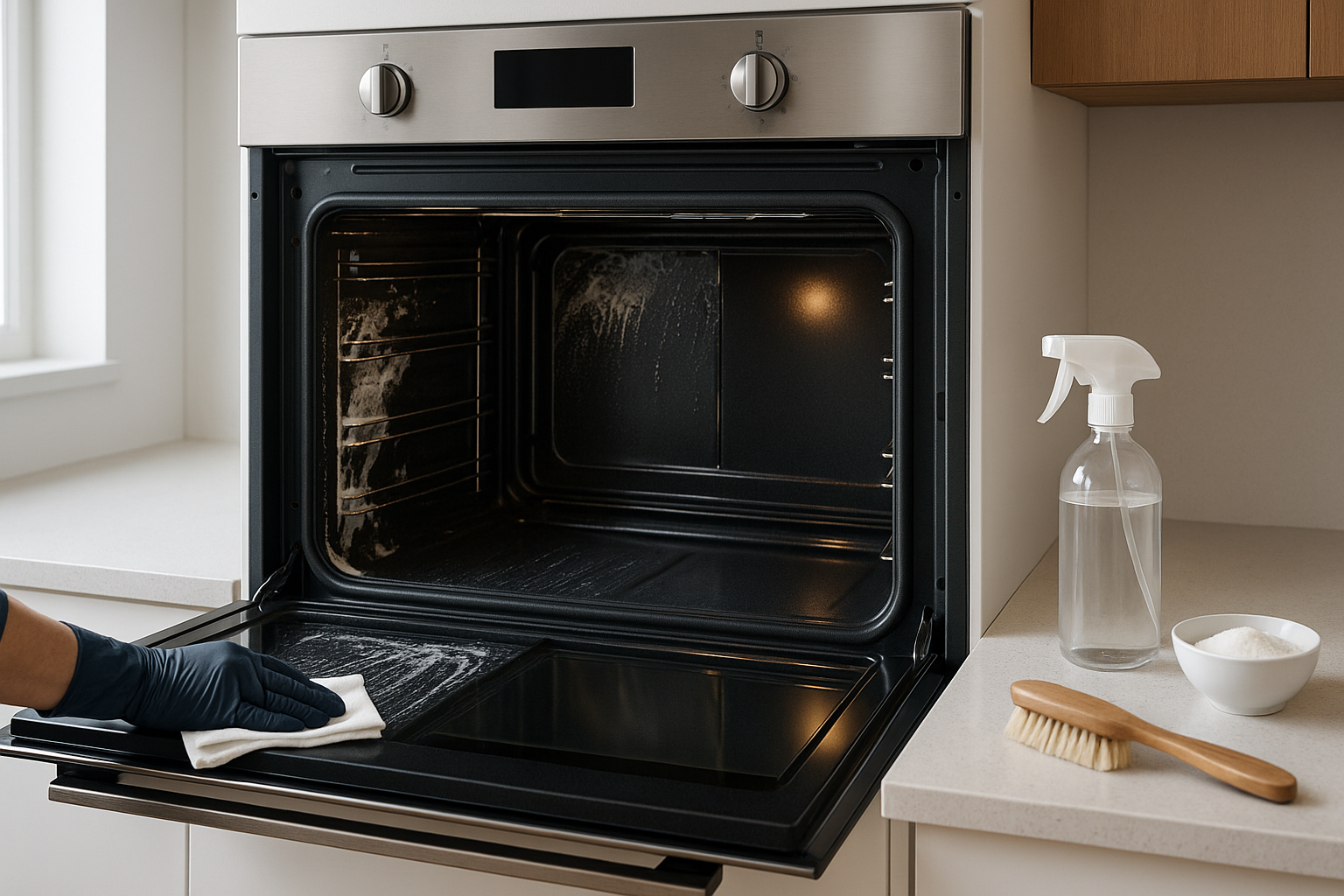
Kitchens get degreased and reset. Appliances are wiped inside and out, including the microwave ceiling and toaster crumb tray. The fridge is emptied of perishables, shelves cleaned, and basic condiments checked for leaks. Glassware is spot-checked under bright light, then stacked rim-up. Worktops, splashbacks, handles, and light switches are sanitised. If a kettle has scale, it is descaled. The bin is emptied and lined, and the area around it is mopped because that is where drips collect.
Bathrooms are detailed. Taps and screens are descaled, grout is scrubbed where needed, mirrors are buffed until the edges are clear, and hair traps are emptied. Toiletries are topped up or replaced. Towels are folded consistently and placed where guests will instinctively reach for them.
Living spaces are reset to match your listing photos. Sofas are vacuumed under the cushions, throws are folded, and coffee tables are cleared of fingerprints. Lamps are checked, bulbs replaced from your spares, and remotes are cleaned then placed together. Floors are vacuumed and mopped as appropriate, paying attention to the edges where dust collects.
Final touches matter. The cleaner sets the thermostat to your preferred arrival temperature, opens or closes curtains to fit the light, and places the welcome booklet where it can be seen. A short gallery of time-stamped photos goes to you. These photos serve as proof of condition and protect you in case a guest reports an issue later.
Linen logistics are the backbone of stress-free hosting. The simplest setup is two or three full sets per bed, plus one towel set per guest with a spare for emergencies. Cleaners rotate sets so nothing wears unevenly. White cotton is still the standard because it can be hot-washed and stain-treated without colour surprises. Mattress and pillow protectors are essential. They are easier to replace than the items they protect.
If you use an external laundry, plan your pickup and delivery windows around peak turnover days. Cambridge services book up fast on Fridays. A reliable cleaning partner will coordinate laundry runs, tag items by property, and quarantine any stained pieces for spot treatment.
Consumables should be standardised and stored on site in a labelled cupboard. Keep a simple checklist with minimum counts so the cleaner can restock without guesswork. Typical items include:
Refill where practical. Many hosts now switch to concentrate refills for soaps and cleaners to cut plastic waste, then provide a quick note in the welcome book so guests know products are gentle and fragrance-light.
The best cleaning teams run on communication. They confirm every booking, request arrival extensions when needed, and report issues with photos and clear notes. Damage or missing items are flagged the same day, not after the next guest checks in. Lost and found is logged with photos and bagged with the checkout date, so you can handle returns promptly.
Trust is built on process. Key holding must be secure, whether that is a coded lockbox with regularly updated codes or a digital access system. Staff should be vetted, trained, and insured. Look for employers’ liability and public liability cover, plus proof that staff are briefed on safe chemical handling. If your cleaner stores guest data, even something as simple as names and dates, they should handle it with care and minimal exposure.
A simple service level agreement helps. It outlines arrival windows, scope of work, what counts as an emergency, and the standard of photo proof. It also sets expectations for peak days, last-minute bookings, and weather delays. Clarity upfront prevents tension on busy Fridays.
Rates vary by property size, scope, and laundry needs, but most Cambridge hosts will see these ballpark figures:
Studios and small one-beds often fall between £60 and £90 for a standard changeover that includes a quick kitchen and bathroom detail, light dusting, and floors. Larger one-beds and two-beds typically range from £80 to £140, especially if there are two bathrooms or outdoor areas. Big townhouses, multi-bedroom mews houses, or properties with terraces can rise to £150 to £250 when multiple beds, extra bathrooms, and stairs are involved.
Laundry is usually itemised. Expect per-bed linen fees and per-towel fees if an external laundry is used. Some teams offer bundled pricing that includes one full bed set and one towel set per guest. Deep cleans, oven detailing, inside windows, and carpet shampooing are add-ons. A quarterly deep clean line item is common for busy properties because it keeps changeovers efficient the rest of the time.
Cheapest is rarely best for short lets. You are buying reliability and review protection. The right provider saves money in avoided complaints, fewer refunds, and less host time spent firefighting.
Ask practical questions that reveal how the company actually runs.
How do they handle last-minute bookings and calendar sync? Integration with your Airbnb, Vrbo, or direct booking calendar avoids missed cleans and frantic calls. What evidence do they provide after each job? Photo sets and checklists reduce disputes and help you improve the listing. Who covers if your usual cleaner is ill? Teams beat individuals for peak reliability.
What do they know about Cambridge specifics? Listen for mention of bin rules, limescale management, and seasonality. Can they handle linen flows on peak Fridays without stockouts? Will they flag maintenance issues like slow drains or mould before they become problems?
Finally, read recent host reviews, not just star ratings. Look for praise about punctuality, consistency, and communication during stressful moments. Anyone can clean a calm Tuesday. You want proof they deliver when the calendar is tight and a guest is arriving at 4 p.m.
A thoughtful onboarding pays for itself in fewer messages and cleaner handoffs. Share your listing photos and ask the team to reset the space to match them. Build a property quick sheet that covers quirks guests often ask about. Boiler reset steps, where to find the extra key, how to open the tricky sash window, and which bin goes out on which day.
Create a labelled cleaner’s cupboard with spares, a vacuum that actually works, mop replacements, colour-coded cloths, and a caddy that fits your layout. Provide two lockbox codes, one for guest use and one for the cleaner, and set a process for changing them regularly.
Walk the first clean together if possible. Agree on details like how to style the bed, where to place the welcome book, and how many toiletries to leave out for a two-night stay. Decide how you want issues escalated. A text with photos is faster than a long email when a guest is due in two hours.
Two or three small habits materially change outcomes. Keep exterior entry points clean and well-lit. First impressions start at the door, and clean thresholds reduce grit carried inside. Upgrade to washable matt paint in high-touch corridors and around light switches so scuffs can be wiped rather than repainted. Choose machine-washable cushion covers and throws. Visual softness sells rooms in photos, but only if the fabrics can be kept fresh.
Standardise where possible. The same towel style, the same bed setup, and the same coffee station layout make cleans faster and reduce guest confusion. Invest in quality mattress and pillow protectors, then replace them before they look tired. Guests rarely comment on protectors, yet they do comment on stains.
Finally, set a clear policy for early check-ins and late checkouts. Build a small buffer into your calendar on peak days so cleans are never compressed to impossibility. Your provider can often accommodate extras with notice. No one can magic an hour out of thin air at 11 a.m. on a Sunday in June.
Cambridge runs on cycles. Michaelmas term arrivals, winter conferences, spring tourists, May Balls, and summer graduations all bring waves of bookings. Add in big weekends when punting weather is perfect and you will see pressure points on your calendar.
Plan staff coverage and linen capacity around those windows. Increase laundry pickups in June and July, then scale back in quieter weeks. Slot deep cleans in late August or early January when stays naturally dip. If you host near the station or the Biomedical Campus, watch for conference schedules and book extra cover for weekday turnovers. If your property is in a historic terrace near the city centre, factor in parking and access constraints that add a few minutes to every clean.
The goal is not to eliminate pressure. It is to anticipate it so no one is surprised when three checkouts and four check-ins stack on the same day.
Guests often mention eco touches in reviews. Refillable dispensers for hand soap and body wash reduce plastic and look tidier than a jumble of miniatures. Concentrate refills cut packaging and cupboard space. Microfibre cloths, colour-coded for hygiene, reduce chemical use while delivering a streak-free finish on glass.
Choose low-fragrance, low-allergen products. They are kinder to guests with sensitivities and make spaces smell clean rather than perfumed. Ventilation is free and effective. A few minutes of fresh air during and after cleaning leaves the property feeling crisp.
Work with your team on recycling. Place clear labels inside kitchen cupboards so guests know which bin is which. If your property uses communal bins, include a line in the guidebook about where they are and which days they go out. Small instructions prevent big messes.
Changeovers keep you shining day to day. Deep cleans keep you resilient month to month. Book them when photos start to look a bit dull, grout lines darken, or limescale builds faster than the descaler can keep up. After winter is a smart time to treat windows, skirting boards, radiators, under-sofa dust, and behind-appliance grease. If you accept longer bookings, schedule a deep clean right after checkout, before your next run of short stays.
Deep cleans often include oven and hob detailing, inside windows, full descaling, tile grout refresh, skirting and door frames, mattress vacuuming and rotation, and a full inventory check. They make regular changeovers quicker and reduce the odds of a mid-stay complaint.
Short lets rise or fall on details that are invisible when they are done right. A guest walks into a space that smells fresh, looks exactly like the photos, and feels easy to use. No one praises clean kettle elements in a review, yet the absence of limescale is part of what feels right. That is the value of a dependable short let cleaning Cambridge partner. It is not just about mopping floors. It is about keeping pace with a city that moves fast, then making your property feel calm and cared for.
Choose a provider that understands hospitality, the quirks of Cambridge, and the rhythm of your calendar. Set them up to succeed with standards, spares, and clear communication. Your reward is simpler hosting, steadier income, and reviews that keep bookings rolling without constant intervention.