April 7, 2026
April 8, 2026
How to Clean Oven Fast: Safe, Simple Steps for Sparkling Results
You put off cleaning the oven because it feels like a day-long chore. Then dinner smokes, the kitchen smells, and that baked-on spill stares back every time you open the door. The truth is, you do not need an entire afternoon or harsh chemicals to get a sparkling result. With a few smart moves, you can cut through grease quickly and safely, even if it has been a while.
This guide walks you through how to clean oven interiors fast using simple supplies and a clear plan. You will learn when a quick steam wipe is enough, when to add a baking soda boost, and how to tackle racks and glass without scratching or fumes. Choose the method that matches your mess, then get back to cooking without smoke or smells.
Before you reach for the cleaner, take a minute to assess the grime. That decision saves time.
If your oven has light splatters and a little haze, a steam-and-wipe refresh will take about 15 minutes and leave it fresh. If you see sticky brown patches and a few burned edges, add a short baking soda treatment and budget around 30 minutes. If the oven is very neglected with thick carbon build-up, you can still make fast progress today, then plan an overnight paste for the worst areas next time.
Speed does not matter if you risk a burn or damage. A few careful steps make the work faster and safer.
Turn the oven off and let it cool until warm to the touch. Slight warmth softens grease so it wipes easier. Unplug the oven or switch off the breaker if you plan to clean around any electrical parts, especially in a wall unit. For gas ovens, make sure all flames are off and the gas is not flowing.
Remove the racks and set them aside. Crack a window. Put on gloves to protect your hands from grime and any cleaner. Avoid mixing products. Never combine bleach with anything acidic, including vinegar. Do not saturate or scrub heating elements, the gas igniter, or the oven light socket.
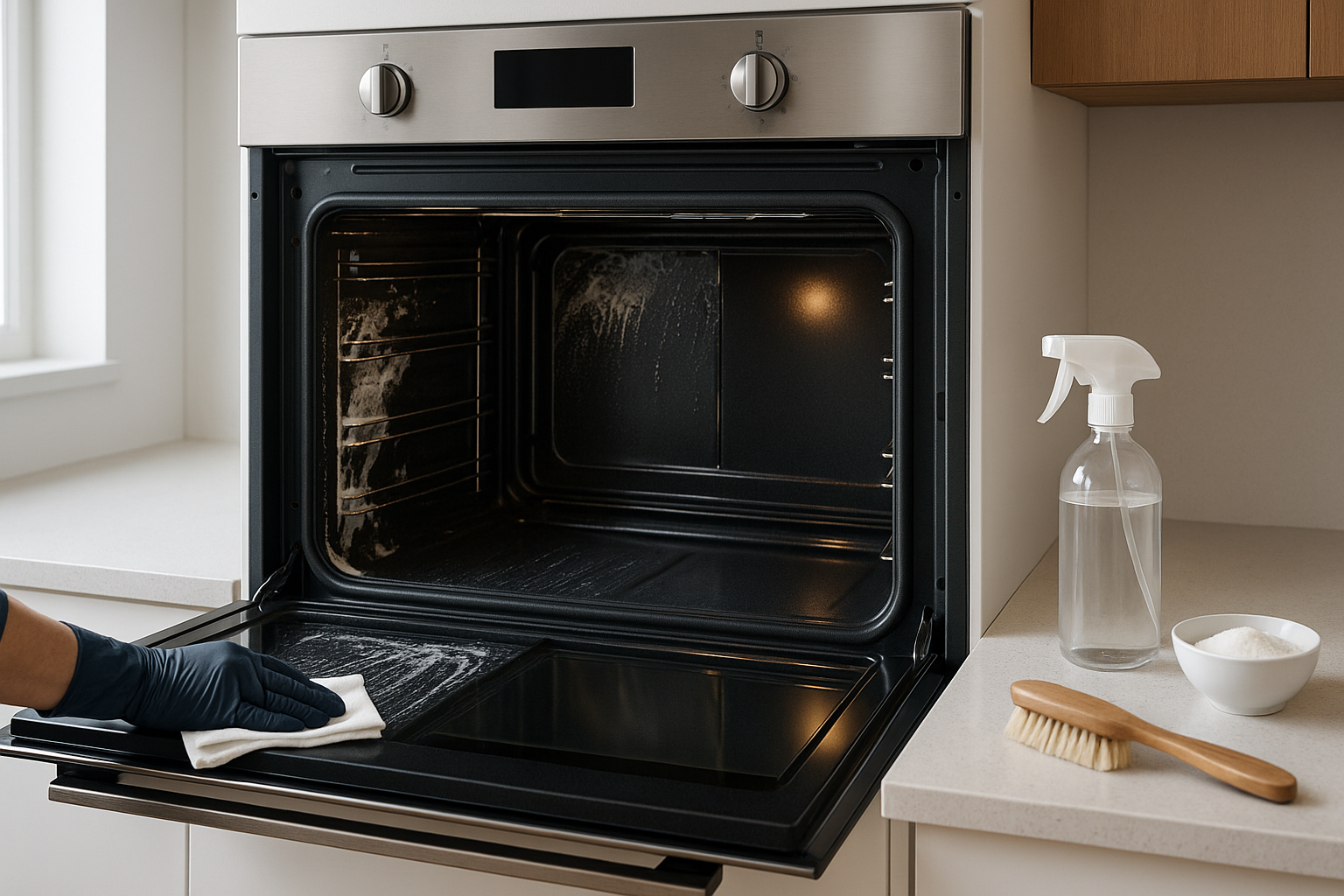
Gather what you need so you are not hunting halfway through. A small bucket or bowl of warm water with a drop of dish soap, a spray bottle of plain water or equal parts water and white vinegar, baking soda, two or three microfiber cloths, a non-scratch sponge, and a plastic scraper or an old credit card are usually enough. Keep a dry towel nearby for the final buff.
For light grime or a quick odor reset, steam loosens residue so you can wipe it away without scrubbing.
Start by removing loose crumbs. A handheld vacuum or a dry paper towel works well. Place an oven-safe bowl or pan filled with water on the center rack. Add a cup of white vinegar or a few lemon slices if you want a deodorizing boost. Heat the oven to 200°F, about 95°C, for 5 to 10 minutes until steam forms. Turn it off, keep the door closed for another five minutes to let the steam settle on the walls, then carefully remove the bowl.
Wipe the interior while it is still warm, not hot. Use a damp microfiber cloth and work from the top down so you do not move dirty water onto clean areas. For small spots that resist wiping, a non-scratch sponge with a drop of dish soap will help. Rinse the cloth often in clean water to avoid leaving a film.
Tackle the glass door next. Spray it lightly with your vinegar solution, then buff with a dry microfiber cloth until it is streak free. For a stubborn drip line between the panes, a quick exterior clean will not reach it, but a thorough interior wipe and buff usually removes the haze you actually see.
Finish by drying all surfaces. Leaving moisture invites streaks and can trap smells. If you have 30 seconds left, run a clean, dry cloth over the door gasket to remove any mild residue. Be gentle so you do not dislodge the seal.
This refresh handles day-to-day grime. If you can still see sticky brown patches, move to the baking soda boost.
Baking soda is mildly alkaline, which means it breaks down fatty, baked-on residues. Used on a warm surface, it works faster than you might expect.
Warm the oven to about 150°F, then turn it off and crack the door for a minute. You want the interior pleasantly warm, not hot. Mix a thick paste of baking soda and warm water, about three parts soda to one part water. A teaspoon of dish soap adds a little extra degreasing power.
Spread a thin layer over the worst spots on the bottom, sides, and back wall. You do not need a heavy coat for this quick version. Focus on brown patches and carbon edges, and avoid direct contact with heat elements or igniters. Let the paste sit for 10 to 15 minutes while you clean the racks or door.
After the short dwell time, spritz the paste with plain water or your vinegar solution. It will foam slightly and soften more grime. Wipe with a damp sponge or cloth. Fold the cloth often to expose a clean side and keep rinsing in a bucket of warm water. If a patch still resists, use a plastic scraper at a shallow angle and gently lift it. Avoid metal scrapers inside the enamel cavity so you do not scratch.
Rinse the interior thoroughly. Residual baking soda leaves a chalky film that can haze the glass and dull the finish, so go over the surfaces with a clean cloth and fresh water, then dry with a towel. Open the door for a few minutes to air out.
Racks collect grease mist and turn dull. For a quick clean that fits inside the 30-minute window, lay the racks in the sink or tub lined with a towel to prevent scratches. Sprinkle baking soda on a damp non-scratch pad, add a couple of drops of dish soap, and scrub the rungs. Focus on the front edges you see most. Rinse and dry immediately so water does not spot.
If your racks are heavily discolored, accept that color change as cosmetic. Bright silver often does not return without long soaks. What matters is removing sticky residue so they feel smooth and no longer smoke.
Grease on the door bakes into faint rainbows and smudges. For the interior glass, spread a thin baking soda paste and let it sit for 10 minutes. Wipe clean with a damp cloth, then spray a little vinegar on the glass and buff dry. If a baked-on drip remains, a razor blade used gently at a shallow angle on the glass surface can lift it. Use the blade only on the glass, not on enamel, and keep it flat to avoid scratching.
Do not remove the fan cover or touch electrical parts. A barely damp cloth and a light touch around these areas are enough. For gas ovens, avoid spraying liquid near the igniter or pilot. If debris sits near the igniter, nudge it away with a dry brush, then vacuum.
Plenty of store-bought cleaners work well, but many have strong odors and require long airing out. If you prefer to keep it gentle, the baking soda method above handles most household grime. A few extras can speed things up without harshness.
Concentrated dish soap breaks surface tension and loosens grease. A pea-sized amount on a damp sponge and a warm oven surface often does more than expected. Hydrogen peroxide adds mild whitening and lifts stains when mixed with baking soda to make a paste. Enzyme-based degreasers, labeled as fume-free, can be a good compromise for sticky spills. Always check that any product is safe for enamel surfaces and follow the ventilation instructions.
Avoid ammonia in a closed oven. It can be effective, but the fumes are strong and risky if misused. Skip anything abrasive like steel wool inside the cavity. It scratches enamel and makes future cleaning harder because grease bonds to rough surfaces.
Self-cleaning sounds like the quickest fix, but it takes several hours and raises the oven to very high temperatures. That heat turns residue to ash, which you then wipe away. It can smoke and smell, and it puts stress on parts. If you have pet birds, avoid running self-clean completely because the fumes can be dangerous to them.
If your goal is to cook later today or tomorrow without a lingering odor, stick with the fast manual clean. You will remove the mess that actually causes smoke, you will not heat the kitchen for hours, and you control the process.
Use self-clean when the oven is heavily soiled and you can be home for the duration with the windows open. Remove racks first because extreme heat can discolor the chrome and wear down the glides. Wipe loose crumbs so they do not bake into new spots. When the cycle ends and the oven cools fully, dust out the ash with a damp cloth and dry the surfaces. Even after self-clean, a quick glass buff often improves clarity.
Sometimes the oven looks clean but still smells like last week’s roast. Odors hide in the door gasket and small crevices. After wiping the interior, spray a cloth with vinegar and gently clean along the gasket. Do not stretch or pull it. Leave a small bowl of baking soda in the cold oven overnight to absorb lingering smells. You can also heat a pan of water with lemon slices for 10 minutes the next day, then let it sit while the oven cools. That leaves a neutral, fresh scent.
If smoke persists when you preheat after cleaning, there is still residue on a hot spot. Turn off the oven, let it cool, and run a cloth over the bottom and near elements to check for thin films. Even a trace can smoke at high heat. One more quick rinse usually fixes it.
Sugary spills like fruit pie, jams, or syrups carbonize and cling. Use the baking soda paste and give it a full 20 minutes. If it still holds, switch to a warm water compress. Soak a cloth in very hot water, lay it over the spot for a few minutes, then scrape with a plastic scraper and wipe.
Melted cheese or plastic hardens into a smooth lump. For cheese, warm the oven slightly and use a plastic scraper to lift the edge, then wipe with a soapy sponge. For melted plastic, do not heat. Chill the area with an ice pack wrapped in a towel until the plastic turns brittle. Gently chip it away with a plastic tool. Ventilate the kitchen well if any residue remains and avoid heating the oven until it is fully removed.
Enamel chips need care. If you find a chip, do not scrub that area with abrasive tools. Clean around it gently and consider a small enamel repair kit to seal it later. Exposed metal can rust and hold onto dirt.
Streaks on the glass often come from cleaner residue. Rinse with clean water and buff dry with a microfiber cloth. If you see a shadow between the glass panes, that is inside the door assembly. Most ovens let you remove the door and separate the panes for a deep clean, but it takes time and careful reassembly. For speed, focus on the interior pane you look through most and leave the internal shadow for a dedicated project.
A fast clean lasts longer if you introduce one or two small habits. Wipe warm, not hot, after messy roasts or casseroles. Even 60 seconds with a damp cloth the same evening prevents the next day’s smoke. Use a rimmed baking sheet on the lower rack to catch drips from bubbling pies or pizzas. Skip foil on the oven floor. It can trap heat and damage enamel. If a spill happens mid-cook, sprinkle a little table salt onto the fresh spill carefully. Salt absorbs liquid and keeps it from baking into a hard glaze, and it scrubs away easily once the oven cools.
Give the oven a steam refresh every couple of weeks. It takes 15 minutes end to end and prevents the slow build-up that turns into an all-day job.
Imagine you just roasted chicken and notice haze on the door and spatters on the side walls. You want a quick reset before the next use.
Warm the oven to 200°F with a bowl of water and a splash of vinegar inside. After 10 minutes, turn it off and remove the bowl. Wipe down the interior and glass with a damp microfiber cloth, targeting visible splatters. Mix a tablespoon of baking soda with a little warm water and soap, then dab the paste on the two brown patches you can still see. Wait 10 minutes while you scrub the front edges of the racks in the sink with a soapy sponge. Come back, spritz the paste with water, wipe it away, rinse with a clean damp cloth, and buff dry. Total time, about 25 minutes, and the next preheat will be smoke free.
If you notice persistent smoke with a clean oven, uneven heating, or a strong gas smell, pause the cleaning and call a technician. Build-up around igniters, damaged seals, or electrical faults can masquerade as dirt. A professional check keeps you safe and protects the appliance.
You do not need to choose between a toxic fog and a half-day scrub. A warm oven, a little steam, and a quick baking soda paste handle most grime fast. Pick the approach that fits the mess, work while the surfaces are warm, rinse well, and dry for a clear finish. Once you learn how to clean oven interiors this way, the task becomes a short routine, not a dreaded project. Clean, odor-free cooking can be a weeknight thing, not a weekend sacrifice.