April 8, 2026
April 4, 2026
Booking.com Cleaning Cambridge: Fees, Rules and Tips
Guests get surprised by cleaning fees. Hosts get stressed by tight turnarounds. In Cambridge, where peak season collides with graduations, festivals, and a constant flow of academic visitors, cleaning can make or break a stay. Get it right and you earn five-star reviews. Get it wrong and you risk complaints, extra costs, and awkward checkouts.
This guide explains how booking.com cleaning Cambridge works from both sides. You will find how fees are usually set and shown, what rules are reasonable, what the local market expects, and practical tips to keep standards high without wasting money. Whether you are booking a self-catering flat near the River Cam or running a townhouse in Chesterton, clean and clear beats rushed and confusing every time.
On Booking.com, cleaning can be handled in different ways. Some properties build cleaning into the nightly rate. Others add a one-off cleaning fee per stay. A few offer optional mid-stay cleans for a charge, most relevant for longer bookings.
If a property charges a cleaning fee, it must be disclosed on the listing and shown in the total price before you confirm. Hosts cannot tack on a new mandatory cleaning charge after booking. They can, however, request compensation for excessive mess or rule violations, usually via a damage deposit or a claims process.
Hotels on Booking.com handle cleaning differently from apartments and holiday homes. Daily housekeeping is typically part of the hotel room rate, though some hotels now offer reduced cleaning for short stays or on request for sustainability reasons. Self-catering places usually apply a per-stay cleaning fee that covers the turnover between guests rather than daily service.
Taxes and payment methods depend on how the property has set things up. If the host is VAT registered, the cleaning fee often includes VAT. Many Cambridge short-let operators use professional cleaners and linen services, which influences the fee level and consistency.
Cambridge is not the cheapest cleaning market in the UK. Labor costs, laundry, and transport time through busy streets all add up. Ranges vary by property size, finish level, and whether linen service is included.
For context, here is what guests and hosts commonly see across self-catering stays in Cambridge:
High season pushes the upper end. Major events, such as graduation periods, the Cambridge Half Marathon, and the Folk Festival, tighten schedules and raise contractor rates. If a listing looks exceptional but has a lower fee, check whether linen is included and what the check-out expectations are.
A standard turnover fee usually covers:
It rarely covers mid-stay housekeeping, deep cleaning of appliances, stain removal on upholstery, or extra sorting after parties or smoking. Those items, if needed, can trigger additional charges through a deposit.
Guests should look for the House Rules section on a Booking.com listing before booking. In Cambridge, you will often see a tidy list of checkout tasks. These are not meant to turn you into the cleaner. They help the next arrival and keep costs realistic for everyone.
Common and reasonable requests include placing rubbish in the right bins, loading or starting the dishwasher, switching off heating, and returning keys to a lockbox. Some hosts ask for bed linen to be stripped and piled on the bed. Others prefer you leave beds as they are, since a cleaner can spot stains that way. If a host cares about one approach, they will say so.
Quiet hours matter across Cambridge’s residential areas, especially near colleges and family streets. Bike storage rules are frequent too, since so many visitors arrive with bikes or hire them. If a property offers secure bike space, keep it tidy and do not bring muddy tires through the hallway. Mud and limescale show up quickly in period homes with light carpets and older tile grout.
If you plan to cook with strong spices, ask about extractor fans and window venting. Many hosts are happy for guests to cook. They just do not want lingering odors that take extra time to remove, especially with same-day turnarounds.
When in doubt, message your host through Booking.com. A quick note about a broken glass, a stained towel, or an accidental spill can save hassle later. Most hosts respond well to honesty and will guide you on what to do next.
Hosts succeed in Cambridge by keeping turnover simple, reliable, and clear. Start with a defined scope, then lock in people and timing.
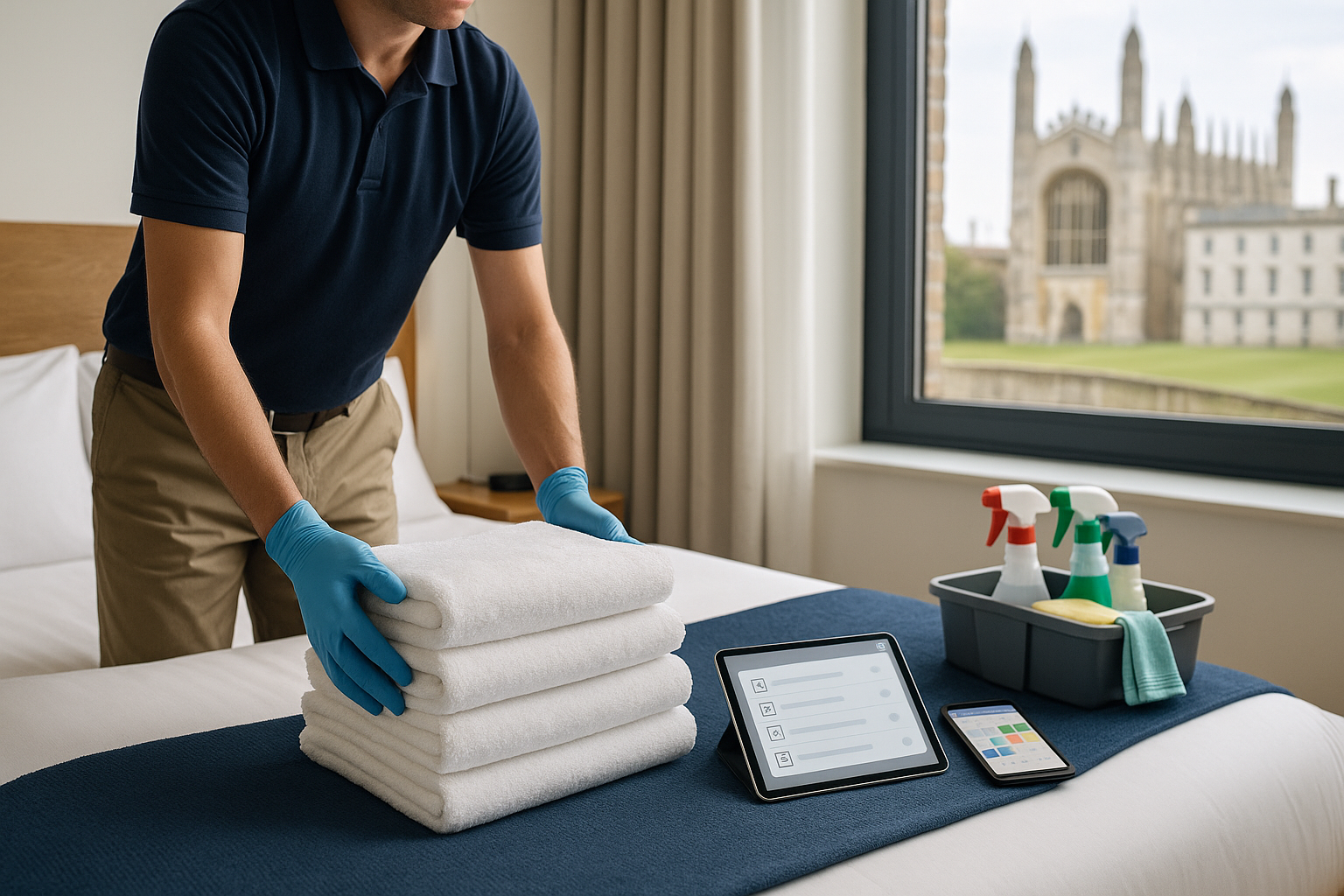
A good turnover checklist includes bathroom detail, kitchen wipe-downs and appliance fronts, high-touch points, floors, mirror checks, window sills, and a final photo set after staging. Include a short section just for linen. Cleaners should know exactly where fresh sets are stored, which beds get mattress protectors, and how towels are folded to match your photos. If your property includes a sofabed, label the bedding clearly and show the storage location in your house manual.
Scheduling is everything. Back-to-back bookings are normal during peak months, so secure your cleaning team well ahead of graduation periods and festival weekends. Many operators reserve standard slots on bin collection days and use those windows to manage waste as well. If you handle laundry offsite, allow time for pickup and return without bottlenecks at 11 a.m. checkouts.
Cambridge properties often face two quirks: hard water and humidity. Limescale builds quickly in kettles, showers, and tap aerators. Keep limescale remover on the trolley and schedule a quick descale weekly during high occupancy. For humidity, especially in older terraces, leave clear instructions about using extractor fans and trickle vents. A small dehumidifier for winter can protect paintwork and reduce musty smells.
Finish level sets expectations. If your listing photos show hotel-style presentation with crisp whites and flowers, your cleaning fee must support that. Guests forgive a modest space if it is spotless. They rarely forgive glittering photos that do not match reality.
Linen is where turnovers speed up or slow down. Many Cambridge hosts use one of three approaches. Some hire a linen service that delivers pressed sheets and towels in sealed bundles. This costs more per stay but removes ironing, shrinkage, and storage headaches. Others buy multiple sets per bed and wash in-house with a washer-dryer. That can work for one-bedroom flats but becomes risky with back-to-backs, since drying times stretch longer than expected. A hybrid model, where towels come from a service and sheets are laundered in-house, can be a decent middle ground.
Whichever approach you choose, standardize. Use the same brand and size for every bed. Color code or label shelves for each room. Keep at least one full spare set beyond what you need for the next check-in. For stained items, pretreat quickly and run a separate cycle. Attempting to salvage a bad stain mid-turnover can delay the entire schedule, so train cleaners to bag and log it for after-hours.
Cambridge residents follow a council-run schedule for general waste and recycling. Collections vary by street. Do not guess. Check the local council website for your exact address and add the correct bin day to your house manual. Put clear signs above bins that show what goes where. If your property gets a lot of international visitors, include simple icons and one photo of the bins outside, so guests know exactly where to take rubbish.
One small change improves outcomes fast. Provide enough bin liners and tell guests which cupboard stores replacements. Many extra cleaning charges happen because rubbish piles up indoors when guests run out of bags.
Guests book faster when they know what they will pay. Hosts convert better when they avoid debates at checkout. Publish your cleaning fee clearly, describe what it covers, and keep your checkout tasks short. If you charge a security or damage deposit, outline when and how it is released. Clarity reduces messaging back-and-forth and drives better reviews.
If you are a guest comparing options, open the Price Breakdown on Booking.com and look for any separate cleaning fee. Two similar flats can have very different all-in costs once you add the fee and taxes. If a fee looks higher than average, check the amenities and reviews. A higher fee might include premium linen, baby equipment cleaning, or pet sanitation. Decide if that matters for your stay.
A three-night academic visit during term usually sees a standard per-stay cleaning fee with no mid-stay service. If you prefer a change of towels or a quick tidy on day two, message the host. Some offer it for a small charge if schedules allow.
Extended stays for research or a month-long corporate project often involve weekly or biweekly cleans. Hosts price these in or offer them à la carte. Confirm the schedule and linen policy upfront, and set a time window that does not clash with your meetings.
Family trips over half term bring extra wear, from prams in the hallway to sticky fingerprints. Hosts who cater to families typically invest in washable throws and durable rugs. Guests can help by wiping spills straight away and closing stair gates gently rather than leaving them forced open.
Pet-friendly places should list any extra cleaning rules, such as keeping dogs off beds or crating when unattended. Many charge a pet fee that covers hair removal and deodorizing. If you are bringing a pet, pack a spare blanket and a lint roller. That small prep often prevents friction later.
Cleaners who understand short stays are worth their weight in five-star reviews. They think like operators, not just domestic cleaners. When hiring in Cambridge, ask about hotel or short-let experience, comfort with photo-based staging, and reliability on weekends. Hourly rates typically range from £14 to £25 depending on experience and whether they bring supplies. Turnover pricing per job is common, since it rewards speed and results.
Provide a clear spec list and room-by-room photos that show the standard you want. Use a simple checklist that cleaners can complete on their phones, including a place to flag maintenance issues. A loose door handle or slow-draining sink can ruin an otherwise perfect clean if left for the next guest to discover.
Finally, pay promptly. Good cleaners are booked solid during peak months. Operators who communicate well, respect schedules, and settle invoices quickly rise to the top of their call list.
Most disputes come from mismatched expectations. A few habits prevent problems for both sides.
Guests should take a minute to read the house manual. If the host asks that you leave the keys in a lockbox and not the letterbox, follow that to the letter. If you break something, say so promptly. Small items are rarely a big deal when reported quickly, but they can become larger claims when discovered after the fact.
Hosts should keep checkout tasks reasonable. Asking guests to mop floors or wash and iron linen tends to backfire. Focus on essentials that protect your schedule, like trash to bins and dishes loaded. Put it in writing, confirm before arrival, and thank guests for their help. A friendly tone works better than a list of capitalized don’ts.
If you must claim extra cleaning, document it properly with time-stamped photos and a short breakdown of costs. Guests are more likely to accept a fair, well explained request than a vague charge.
Some listings explain cleaning and checkout rules in a single, neat paragraph. Others spread details across the Description, House Rules, and small print. When you are comparing places on Booking.com, scan for:
Reviews help too. Look for mentions of cleanliness, comfortable beds, and pleasant smells. If multiple guests praise the place as spotless, that is a strong indicator that the fee is being spent well.
Cambridge travelers notice small courtesies. A printed note about how to manage bike storage. A reminder to use the provided makeup remover pads so towels do not stain. A little caddy with limescale remover and a squeegee for the shower. These help guests help you, which shortens cleans and protects finishes.
Eco-friendly refills and biodegradable cleaning cloths are appreciated by a city full of students and researchers who care about sustainability. If your property uses green products, say so in the listing. It signals thoughtfulness and can justify a mid-range cleaning fee without pushback.
Clean, clear, and consistent beats everything else. Guests want transparent prices and simple checkout steps. Hosts need predictable schedules and reliable standards. In Cambridge’s busy calendar, that means setting a realistic fee, spelling out what it covers, and training for speed without cutting corners. Do that, and you will avoid surprises, protect your margins, and earn the kind of reviews that keep calendars full all year.